
SeeVid Blog
AI Video Generation Blog
Guides, how-tos and comparisons for Seedance, Kling, Veo, Wan and other AI video models.
50 Best Seedance Prompts: Copy-and-Paste Examples for Seedance 2.0 and 2.5
50 ready-to-use Seedance prompts for cinematic shots, product ads, dialogue, dance, nature, action, food, fantasy and reference-based videos — plus the prompt formula and settings that make them work.
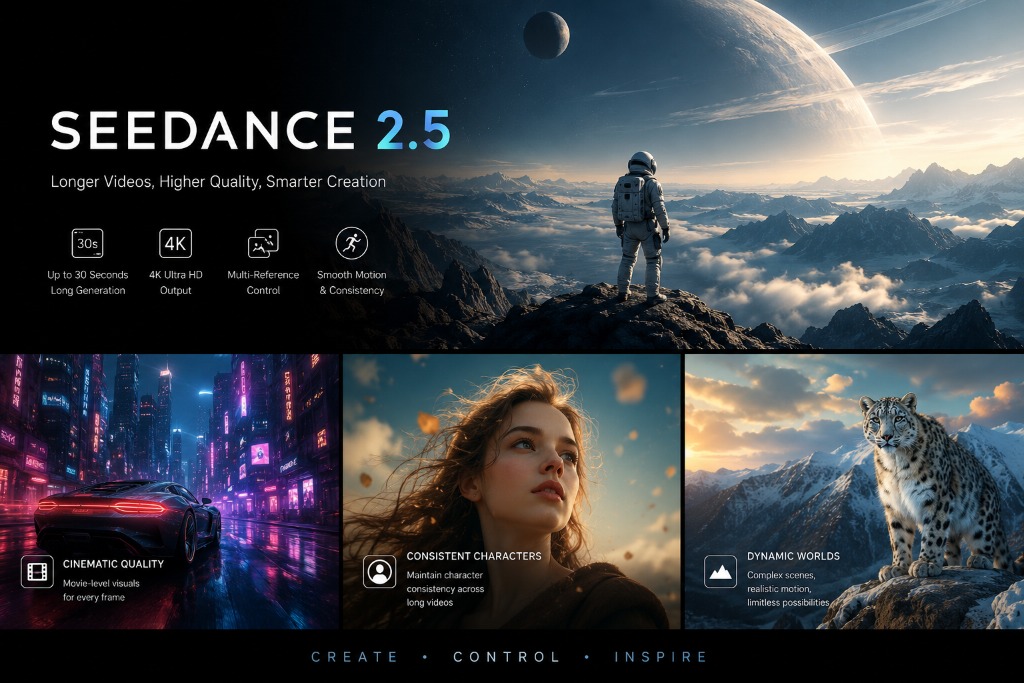
Seedance 2.5 vs Kling 4.0: Which AI Video Model Should You Use?
Seedance 2.5 vs Kling 4.0 compared head to head — clip length, sound, references, editing, extending, prompt length and price per clip — with clear picks for ads, characters, long takes and budgets.
Seedance vs Veo 3.1: ByteDance vs Google AI Video Compared
Seedance 2.0 and 2.5 vs Google's Veo 3.1 and Veo 3.1 Lite — clip length, 4K, sound, references, editing and price per clip — with clear picks for short hero shots, long takes and budgets.
What Is Kling 4.0? Features, Pricing and How to Use It
Kling 4.0 is Kuaishou's new AI video model — 30-second clips in one pass, stereo sound with better lip sync, richer references and video editing. What's new vs Kling 3.0, what it costs on SeeVid, and how to use it.
How to Use Seedance 2.5: Step-by-Step Guide to 30-Second AI Videos
Learn how to use Seedance 2.5 for text-to-video, image-to-video and reference-to-video, plus video editing, extending and draft mode — the settings to pick, how to tag up to 30 references, and prompts that work.
Seedance 2.5 Pricing: Cost per Video, Draft Mode and How to Save
What a Seedance 2.5 video costs by length and resolution, how draft mode, video editing, extending and reference videos are billed, what credits are worth in dollars, and how to try Seedance 2.5 for free.
Seedance 2.5 vs Kling 4.0 vs Veo 3.1 vs Wan 3.0: Which AI Video Model to Use?
Seedance 2.5, Kling 4.0, Veo 3.1 and Wan 3.0 compared on clip length, resolution, audio, references, editing, prompt length and price per video — with clear advice on which model fits which job.
How to Use Seedance 2.0: Step-by-Step Guide with Prompt Tips
Learn how to use Seedance 2.0 for text-to-video, image-to-video and reference-to-video — the settings to choose, how to tag references with @image1 and @video1, and prompt formulas that work.
Seedance 2.0 Pricing: How Much Does a Video Cost (and How to Try It Free)
What a Seedance 2.0 video costs by length and resolution, how Seedance 2.0 Fast, Mini and 2.5 compare, what credits are worth in dollars, and how to try Seedance 2.0 for free.
Seedance 2.0 vs Veo 3.1 vs Kling 3.0: Which AI Video Model Should You Use?
Seedance 2.0, Veo 3.1 and Kling 3.0 compared side by side — clip length, resolution, audio, reference inputs and real cost per video — so you can pick the right model for each shot.
Seedance 2.5 vs 2.0: What's New and Which One Should You Use?
Seedance 2.5 vs Seedance 2.0 compared — 30-second clips, 30 image references, video editing and extending, draft mode, resolution and cost per video — with clear advice on when to pick each.
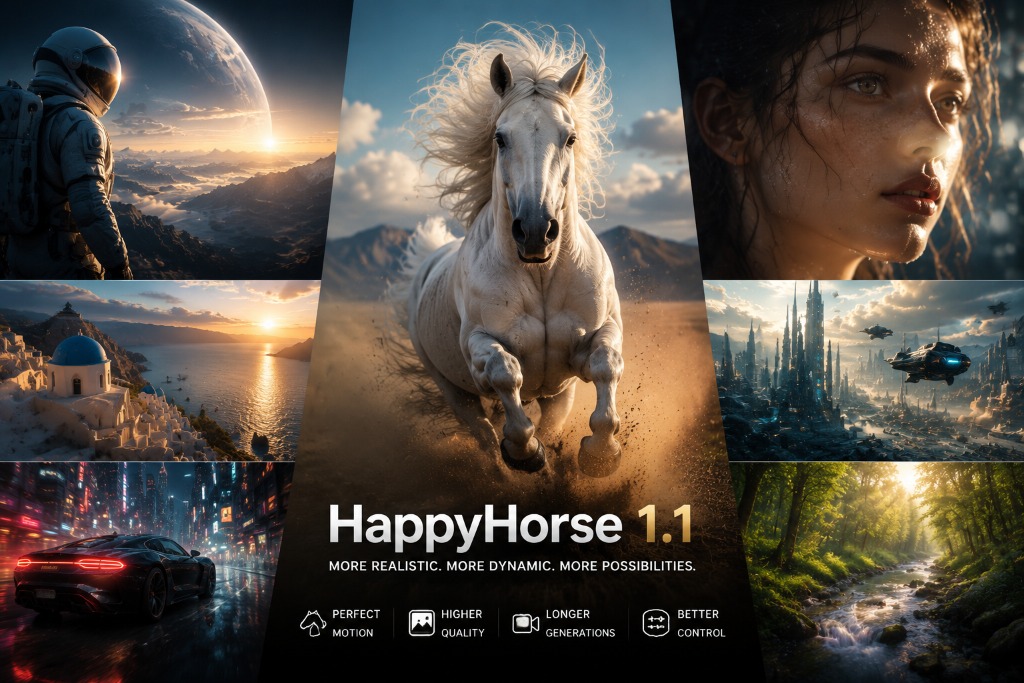
What Is HappyHorse 1.1? Alibaba's AI Video Model — Five Upgrades Explained
HappyHorse 1.1 is Alibaba's ATH team upgrade to its AI video generator — stronger motion, subject consistency, instruction following, visual quality, and audio-visual sync, with text-to-video, image-to-video, and up to 9 reference images.
What Is Seedance 2.0 Mini? The Complete Guide to ByteDance's Budget AI Video Model
Seedance 2.0 Mini is the lightweight tier of ByteDance's Seedance 2.0 family — roughly half the cost of the flagship, about 2x faster than Fast, with text-to-video, image-to-video, and reference-video support for high-volume creative work.
What Is Seedance 2.5? ByteDance's Native 30-Second 4K AI Video Model Explained
Seedance 2.5 is ByteDance's next-generation AI video model — native 30-second 4K clips in a single pass, up to 50 multimodal references, local scene editing, and joint audio-video generation for professional workflows.

What Is Gemini Omni? Google's World Model for AI Video Explained
Gemini Omni is Google DeepMind's multimodal world model announced at I/O 2026 — create and conversationally edit video from text, images, audio, or video. Gemini Omni Flash is live in the Gemini app and YouTube Shorts.

What Is Grok Imagine Video 1.5? xAI's Flagship Image-to-Video Model Explained
Grok Imagine Video 1.5 is xAI's Aurora-powered image-to-video model — Arena
What Is HappyHorse 1.0? Alibaba's Benchmark-Topping AI Video Model Explained
HappyHorse 1.0 is Alibaba's ATH team AI video generator — anonymously topped Artificial Analysis text-to-video and image-to-video leaderboards in April 2026, with native 1080p, multi-shot storytelling, and T2V/I2V workflows.
What Is Kling 3.0 Turbo? Kuaishou's Fast AI Video Model Explained
Kling 3.0 Turbo is Kuaishou's speed-optimized Kling 3.0 tier — text-to-video and image-to-video, bundled native audio and lip sync, up to 6-shot prompts, 720p/1080p per-second pricing for high-volume creation.
What Is Seedance 2.0 Fast? ByteDance's Speed-Optimized AI Video Model Explained
Seedance 2.0 Fast is the speed-optimized tier of ByteDance's Seedance 2.0 family — same multimodal inputs and native audio, faster generation and lower credits, with T2V, I2V, and reference video. SeeVid's default model.
What is Seedance 2.0? ByteDance's Most Advanced AI Video Generator
Seedance 2.0 is ByteDance's next-generation multimodal AI video generation model that creates cinematic videos with native audio, real-world physics, and director-level camera control from text, image, audio, and video inputs.